
Imagine never needing to fumble for keys again or wondering if you locked the door on your way out. Modern apartment access control systems transform property security, make traditional keys obsolete, and turn access management into a seamless, digital experience.
For property management firms and residents alike, a controlled access apartment bolster security and streamline building access operations, marking a significant leap into the future of residential living.
What’s an Apartment Access Control Security System?
An apartment access control system is a sophisticated security framework designed to manage and monitor entry points into apartment buildings and individual units. These systems utilize modern technology such as electronic locks, key cards, pin codes, and even biometric readers to control who can gain access to the property.
By replacing traditional metal keys, controlled access apartments provide a higher level of security and convenience, especially for visitor access. These smart access control systems offer property managers and residents peace of mind and enhanced control over who enters the building.
Access control systems in residential settings can be implemented at various entry points, including:
- Apartment gate security points
- Main building entrances
- Individual apartment doors
- Amenity spaces (gyms, pools, common areas)
- Parking facilities

How Does It Work?
Apartment access control systems function by integrating various components:
Access Control Panel: As the system’s brain, the control panel receives and processes inputs from devices connected across the property. It serves as the central hub for controlling access throughout the building.
Access Reader: Positioned at entry points, the reader instructs the system to grant access or deny access based on the credentials presented, which can be key fobs, access cards, mobile devices, or even biometrics.
Door Lock Mechanisms: These include magnetic door locks and electronic door release mechanisms, which activate to open doors when authorized access is granted.
Management Software: Allows property managers to review access logs remotely, manage access permissions, and control all settings from a central location, often via an internet-connected device.
Types of Apartment Access Control Solutions
Key Cards and Key Fobs
Key cards and key fobs are portable physical access credentials that residents carry to enter the apartment building and other controlled areas like parking facilities. These devices communicate with a card reader or access reader that instructs the system to unlock the door. They are easy to use and can be deactivated if lost, ensuring security is not compromised.
Cloud-Based Systems
Cloud-based access control systems allow property managers to manage access permissions and monitor access events from any location through an internet-connected device.
These systems store data in the cloud, making it easy to update and scale without modifying physical hardware on-site. They offer robust security measures and can integrate with other systems, like video surveillance, for enhanced security.
Mobile Access Control
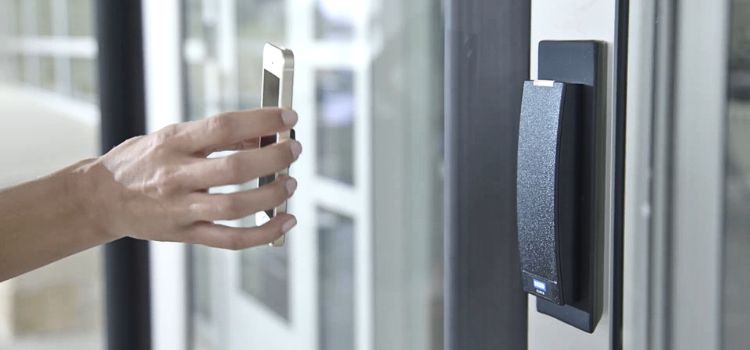
Mobile access control systems use residents’ smartphones as their access credentials. Residents can unlock doors remotely or grant access to visitors without physical keys or cards using an app. This system supports enhanced security features like encryption and can provide notifications of access events directly to a user’s phone.
Apartment Intercom Systems with Door Release
Apartment intercom systems enhance building security by enabling communication between residents and visitors before granting access. These systems typically include a door release mechanism that residents can activate from their apartment to allow entry.
Intercom systems can be integrated with video cameras to allow residents to see who is at the door, providing a high level of security and convenience.
Keypads
Keypads require individuals to enter a correct PIN code to gain access. They are commonly installed at the main entry points of apartment buildings and can be used alone or in conjunction with other access control devices.
Keypads are a secure solution as they eliminate the need for physical keys, though they require users to remember their codes, which can sometimes lead to security breaches if the codes are shared or easily guessed.
Components of a Comprehensive Access System
Control Panel
The control panel acts as the central hub for the access control system. It receives information from various access readers and determines whether to grant or deny entry based on the credentials presented. It also records data related to access events, which can be critical for monitoring and managing access within the building.
For property managers, the control panel offers a centralized point to manage settings, review entry logs, and update access permissions, often interfacing with cloud-based systems for real-time remote management.
Access Reader
Access readers are installed at every point of entry that requires controlled access, such as the exterior and interior doors of an apartment building. An access card reader is an example. These devices scan credentials presented by residents or visitors, such as key cards, virtual keys, or biometric data, and send the information to the control panel for verification.
The access reader instructs the door release mechanism to function or not. Modern access readers can support multiple forms of credentials and are integral to maintaining security by ensuring only authorized personnel gain entry.
Door Release Mechanisms
Door release mechanisms work directly with access readers to physically allow or restrict entry. When an access reader confirms that the presented credentials are valid, it sends a signal to the door release mechanism, unlocking the door.
Common types include magnetic door locks and electric strike systems. These mechanisms are critical for securing entry points and can be tailored to the specific security needs of an apartment complex.
Credentials
Credentials are the keys that residents and authorized visitors use to gain entry to the building. They can come in many forms, including physical key cards, mobile access via phones, pin codes, or biometric data such as fingerprints. Each credential type is encoded with information that the access reader can verify.
Effective credential management is crucial to maintaining security. It ensures that only current and authorized users have access, while outdated or revoked credentials are promptly deactivated.
Benefits of Implementing an Apartment Access Control System
- Enhanced Security: Advanced technologies like biometric data, smart locks, and encrypted credentials reduce the risk of unauthorized access and potential security breaches.
- Ease of Management: Allows property managers to easily control and monitor access throughout the property, including updating or revoking access rights remotely from a cloud-based system.
- Increased Property Value: Modern security measures are highly valued, potentially increasing net operating income through higher rental rates and reduced turnover.
- Convenience for Residents: Provides residents with effortless entry methods and reduces the need for physical keys that can be easily lost or stolen.
- Integrated Security Solutions: Can be linked with other security measures such as security cameras and alarms to provide a comprehensive security solution.
- Scalability: Systems can be easily expanded or adjusted as the needs of the property evolve, supporting everything from a single unit to multifamily properties.
- Audit and Compliance: Automated logs from access events help maintain compliance with housing regulations and security standards.
Integration with Other Building Management Systems

Apartment access control systems can be seamlessly integrated with various smart building technologies, enhancing efficiency and security for modern residential complexes.
Integrating energy management systems, lighting controls, and smart thermostats allows building owners to optimize energy usage, reduce operational costs, and potentially increase net operating income. These systems work together to adjust settings based on occupancy detected by access control, ensuring efficient use of resources.
Linking access control systems with property management software platforms can also significantly streamline administrative tasks. This integration allows automatic updates to the resident directory, synchronized lease management, and maintenance requests aligned with access credentials and entry logs, reducing administrative overhead and improving tenant service.
Additionally, combining access control systems with video surveillance enhances building security. This setup allows for visual verification of individuals entering and exiting, providing a robust security measure that helps resolve disputes and aids in crime investigation.
Access control systems integrated with fire alarms and other emergency response systems can save lives in emergencies. These systems can be configured to unlock doors automatically during an emergency, facilitating quick and safe evacuations.
Finally, integrating access control with visitor management systems ensures that all visitor entries are logged while maintaining high security. It is especially useful for managing access for guests, delivery personnel, and service providers, ensuring that security protocols are followed even during high visitor traffic.
Security & Privacy Considerations in Apartment Access Control
Data Protection and Privacy
Modern access control systems handle sensitive information such as biometric data and access logs. These systems adhere to strict data privacy laws and employ robust encryption and data anonymization techniques. This ensures that resident information stored in the system database is securely protected against unauthorized access.
Resident Control Over Data
Residents have substantial control over their personal information. Access control systems allow residents to manage how their data is collected, used, and deleted, particularly when moving out. They also have the right to access their data, providing transparency and trust in managing their personal information.
Security Measures for Device and Data Integrity
Access control systems incorporate specific security measures to protect both the hardware and the data. This includes fortified physical security for access card readers and in-unit devices and comprehensive cybersecurity protocols for cloud-based systems.
Surveillance and Monitoring
While security cameras and monitoring devices play a critical role in maintaining security, stringent policies govern who can access video footage and how it is utilized to ensure privacy is respected.
Regular Security Audits and Education
Regular security audits ensure access control systems are impenetrable to security breaches and function correctly. Additionally, residents and building staff receive ongoing training on securely and responsibly using the access system, reinforcing the collective responsibility for maintaining security.
Apartment Gate Access Control
For properties with perimeter security, apartment gate access control systems provide an additional layer of protection. These gate security systems manage vehicle and pedestrian entry to the property grounds before visitors even reach the building entrance.
Gate Access Control Features
Modern gate access control solutions typically include:
- Vehicle recognition technology
- Intercom systems for visitor communication
- Remote gate access via smartphone apps
- Integration with the building’s main access control system
- Automatic entry for residents with registered vehicles
- Visitor management for temporary access authorization
Security Benefits of Gate Access Control
Gate access control systems create a secure perimeter around the property, offering several advantages:
- Prevents unauthorized vehicles from entering the property
- Creates a record of all entries and exits
- Allows property managers to limit access during specific hours
- Integrates with security cameras for enhanced monitoring
- Provides residents with a sense of security and exclusivity
FAQs
What is the most secure type of apartment access control system?
The most secure systems typically integrate multiple security measures, such as biometric authentication, smart locks, and video surveillance. This multi-layered approach ensures that only authorized personnel can access the building, and any attempt at unauthorized entry is recorded and addressed.
How can property managers handle lost or stolen access credentials?
Property managers can immediately deactivate lost or stolen credentials to prevent unauthorized access. Most modern systems allow this to be done remotely through management software or an app. It’s also wise to regularly audit and update the access permissions and encourage residents to report lost or stolen items immediately.
What are the latest trends in apartment access control technology?
Current trends include integrating IoT (Internet of Things) to connect various components of building security into a single network, using AI to enhance surveillance and access decisions, and the growing adoption of mobile access, where residents use their smartphones as keys. Cloud-based systems are also becoming more prevalent, offering remote management capabilities and real-time updates.
Key Takeaways
A modern apartment access control system enhances security, improves management capabilities, and increases convenience for residents and property managers.
As security technologies evolve, integrating advanced systems into your property management strategy can ensure your buildings remain safe and appealing in the competitive real estate market.
Contact us today for expert advice and the latest in access control solutions.


