
ButterflyMX and Aiphone solve the same problem in opposite ways. ButterflyMX is a cloud, smartphone-first video intercom that answers entry calls on residents’ phones and runs on a subscription. Aiphone is a wired IP and analog intercom line built for hardwired reliability, in-unit stations, and no mandatory software fee. The right choice in a ButterflyMX vs Aiphone decision comes down to your building type, the wiring you already have, how much an internet outage would cost you, and what the system has to connect to. We install and integrate both, so the comparison below rates each on the same criteria and ends with a clear read on which one fits which building.
Key Takeaways
- Architecture is the real decision. ButterflyMX is a cloud, app-first video intercom with no in-unit hardware. Aiphone is a wired IP and analog system with optional in-unit stations and entry logic that runs locally.
- The cost models differ, not just the prices. ButterflyMX pairs one-time hardware ($3,995 to $6,495 per panel) with a quoted software subscription. Its separate access-control page lists $20 per month per controlled door, gate or elevator; confirm how the selected package is billed rather than adding every published fee automatically. Aiphone is dealer-quoted hardware with no mandatory software fee.
- Internet dependency is the dividing line. ButterflyMX needs a live connection for full function and drops to nearby Bluetooth during an outage. Aiphone’s call and door-release logic runs on local wiring.
- Fit follows building type. ButterflyMX suits app-first multifamily and office lobbies that want minimal wiring. Aiphone suits schools, healthcare, government, and any building that wants hardwired reliability and emergency integration.
- Who installs it matters as much as the badge. Both intercoms tie into access control, cameras, and structured cabling, and we spec and install either one under a single contractor.
ButterflyMX vs Aiphone: Feature Comparison
This side-by-side compares ButterflyMX and Aiphone on the criteria that drive a commercial intercom decision. The order is for navigation, not a ranking. Prices are current as of November 2026. ButterflyMX figures are the manufacturer’s published prices, and Aiphone figures are third-party reseller ranges because Aiphone sells through dealers and does not publish list prices.
| Criterion | ButterflyMX | Aiphone |
|---|---|---|
| Architecture | Cloud, app-first video intercom | Wired IP and analog intercom |
| In-unit hardware | None | Optional (GT and IXG tenant stations) |
| Pricing model | One-time hardware plus recurring software | Dealer-quoted hardware, no mandatory fee |
| Entry hardware price | $3,995 to $6,495 per panel, one-time | Reseller ranges, e.g. tenant stations $440 to $736, IP master stations $1,100 to $1,872 |
| Ongoing fees | Quoted intercom software; separate access-control service lists $20/month per controlled opening | None required; cloud management optional |
| Offline behavior | Nearby Bluetooth fallback only | Local call and door logic keeps working |
| Credential methods | Smartphone app, fob, PIN, QR code | App, fob or card via HID, in-unit station, PIN |
| Maximum scale | Building and portfolio scale via the cloud | IX Series supports up to 5,000 stations |
| Best-fit buildings | App-first multifamily, office lobbies | Schools, healthcare, government, mixed commercial and multifamily |
| Integrations | Access control, cameras, property management software | SIP and ONVIF, HID, access control, mass notification |
Prices as of November 2026. Aiphone figures are third-party reseller ranges; confirm with a project quote.
Cloud App-First vs Wired IP: The Core Difference
The architecture split is the one choice that drives every other difference. ButterflyMX is cloud-hosted and app-first: an entry call rings a resident’s phone, there is no device inside the unit, and property managers run everything from an online directory. Aiphone is a wired system, either IP over your network (the IX and IXG Series) or analog (the GT, JO, and JP Series), with physical answering stations available in each unit and entry logic that can run locally instead of through a data center.
That difference sets the tone for cost, reliability, and installation. A cloud system moves spending toward recurring software and keeps wiring light. A wired system puts more money into hardware and cabling up front, then charges little or nothing to run. Neither approach is better in the abstract. One fits a property manager who wants a modern app and central control, and the other fits a facility that wants entry to keep working no matter what the internet is doing. For a brand-agnostic overview of the category, see our guide to commercial intercom systems.
Pricing and 5-Year Cost of Ownership
ButterflyMX and Aiphone cost differently over five years because their fee structures point in opposite directions. ButterflyMX front-loads a predictable hardware price and then bills every year. Aiphone front-loads more hardware and then bills almost nothing.
ButterflyMX publishes its prices. A video intercom panel runs $3,995 for the 8-inch surface-mount model, $5,995 for the 12-inch surface-mount, $4,495 for the 8-inch recessed, and $6,495 for the 12-inch recessed, each a one-time purchase, according to ButterflyMX pricing. Aiphone’s competitor comparison reports an indicative $30 to $42 per apartment unit per year, but this is not a current ButterflyMX public tariff. Obtain the exact intercom subscription and minimum charge from ButterflyMX’s quote. If you add ButterflyMX access control, that is another $20 per month for each door, gate, or elevator, per ButterflyMX access control pricing.
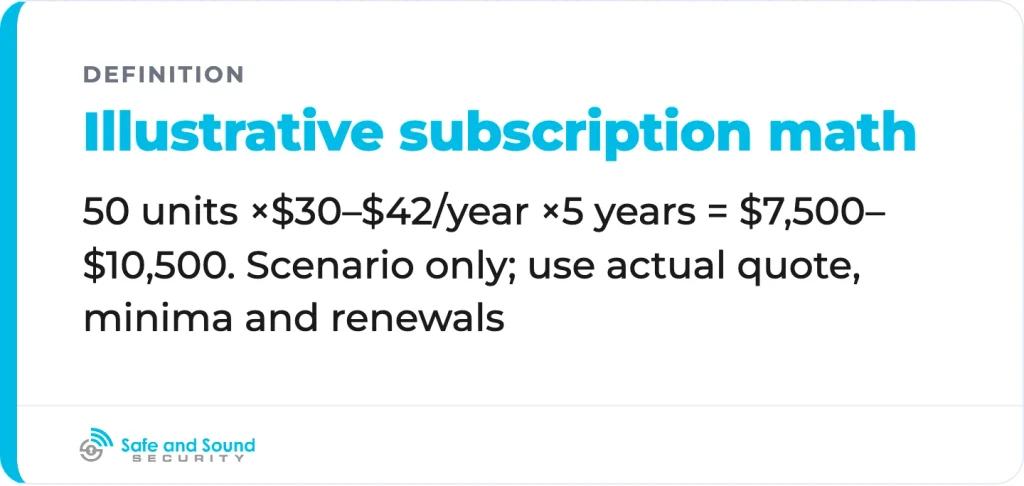
Subscription terms matter over time. For illustration only, if a 50-unit building were quoted $30 to $42 per unit annually, software would cost $1,500 to $2,100 per year or $7,500 to $10,500 over five years. That arithmetic excludes minimum charges, rate increases, installation and separately billed access-control services. It is not a current ButterflyMX tariff.
Aiphone is dealer-quoted and has no published list price, so budgets come from third-party reseller catalogs and a real quote. As a rough guide, reseller listings put IXG multi-tenant tenant stations around $440 to $736, IX Series master stations around $1,100 to $1,872, and GT-1C7 video tenant stations around $369 to $578, as of November 2026. A hardwired multi-tenant building carries more hardware than a single cloud panel, so Aiphone usually costs more up front. The payoff is on the back end: core Aiphone systems carry no mandatory software fee, so year two onward is close to zero. Over five years, a hardware-heavy Aiphone system can land below a subscription system once the annual fees stack up. Aiphone pricing is quoted per project by series, while the app-first option and its published rates sit on our ButterflyMX dealer page.
What Happens During an Internet Outage
Internet dependency is an important operational difference. ButterflyMX’s Bluetooth Fallback guidance says supported, configured systems can keep nearby Swipe-to-Open working during an internet outage. That does not preserve every cloud feature or solve a loss of power; confirm device, app, credential and backup-power requirements and test the actual outage workflow. Aiphone local calls and door release depend on the selected station design, network and power staying available.

Aiphone handles an outage differently because the core system is wired. Call routing and door release run on local hardware, so the intercom and the door keep working without a cloud round-trip. Aiphone offers an optional cloud service for remote management, but it is an add-on, not a requirement for the intercom to function. For a facility where a locked-out entrance is a safety or liability problem, that local resilience is often the deciding factor.
Access, Credentials, and Visitor Entry
Both systems open doors, but they hand out access in different ways. ButterflyMX leans on the smartphone: residents and staff enter with the app, a fob, a PIN, or a QR code, and visitors place a video call to a resident’s phone and get buzzed in. Property managers maintain an online directory and can issue virtual keys for deliveries and guests, which suits buildings with heavy visitor and package traffic.
Aiphone supports the app route through its IXG line, but it also keeps the physical options many facilities still need: in-unit answering stations, guard stations, fobs and cards through native HID integration, and PIN entry. Aiphone’s GT directory panels combine a video door station with a keypad and tenant directory at the entrance. In practice, ButterflyMX is built around the phone, while Aiphone gives you the phone plus hardwired stations for the people and places where a phone is not the right tool.
Scalability and Building Size
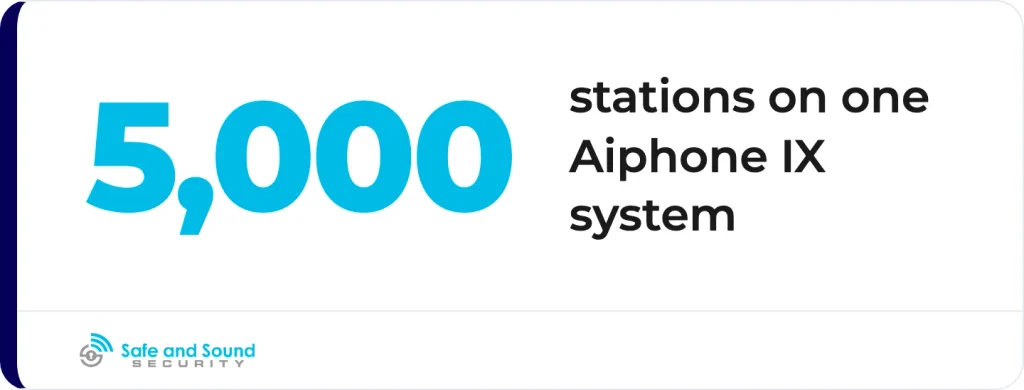
Aiphone scales further on raw station count, while ButterflyMX scales easily across sites through the cloud. Aiphone’s IX Series supports up to 5,000 door and master stations on a single system, according to Aiphone, which makes it a fit for large facilities like schools, hospitals, and multi-building campuses. The IXG Series handles multi-tenant IP deployments at apartment scale, and the GT, JO, and JP Series cover traditional wired buildings from a few units to mid-size properties.
ButterflyMX scales a different way. Because management lives in the cloud, a property company can run many buildings from one dashboard without new on-site servers. The deciding signal is the shape of the job: a single large facility with hundreds of wired stations points toward Aiphone, while a portfolio of app-first buildings managed centrally points toward ButterflyMX. Under about ten units, ButterflyMX’s feature set can be more than a small building needs.
Installation and Wiring Reality
Installation cost tracks wiring more than brand, and this is where the two systems split hardest. ButterflyMX needs power and a network connection to the entry panel and no device inside the unit, so a basic install is fast and light on cabling. ButterflyMX is installed by a local low-voltage integrator rather than by ButterflyMX itself. Aiphone usually means more cable: station runs to answering points, PoE for IX and IXG endpoints, and sometimes reusable existing wiring on a GT retrofit. More stations and more entrances mean more labor.
This is the judgment an integrator makes on every project: what is the wiring condition, how many units and entrances are involved, how much would an outage hurt, and what has to integrate on day one. Safe and Sound Security installs and supports both systems, and our signed-project history as an Aiphone dealer and installer covers Aiphone work across more than 30 projects for 20-plus organizations, going back to 2018. Because we run security and structured cabling in-house under one contractor, the intercom, the cabling, and the access control tie together without handing you off to a second vendor.
Integrations and Compliance
Both intercoms connect to the wider security stack, which matters because an intercom rarely stands alone. ButterflyMX integrates with access control, cameras, and property management platforms, so an entry event can tie into the systems a property team already runs. Aiphone is SIP and ONVIF compliant, which lets it work with VoIP phone systems and third-party video management, and it integrates natively with HID credentials. Aiphone’s IX master stations can also serve as emergency command and mass-notification points, a feature that carries weight in schools and healthcare.

Compliance is a factor for government and institutional buyers. On projects where NDAA compliance is required, we help commercial and public-sector clients confirm that the intercom and its components meet the applicable standards before purchase. See our NDAA compliance overview for how that review works, and our security camera installation page for how the intercom ties into video.
When to Choose ButterflyMX
Choose ButterflyMX when the resident and visitor experience runs through the phone and you want minimal in-unit hardware. It fits multifamily portfolios and office lobbies that want a modern app, virtual keys for deliveries and guests, and centralized cloud management across buildings, where reliable internet is already in place and a recurring software fee is acceptable in the budget.
The deciding tell is a property team that says, “we want residents using their phones, and we want to manage access remotely from one dashboard.” If that describes you, the subscription model is buying convenience and central control, and the light wiring keeps the install fast. The trade you accept is the annual fee and the dependence on a live connection. If you want to see how ButterflyMX stacks up against other app-first systems, our ButterflyMX competitors guide covers the wider field.
When to Choose Aiphone
Choose Aiphone when entry has to keep working in an outage and the system must integrate with access control and emergency functions. It fits schools, healthcare, government, and large campuses that want hardwired reliability, in-unit or guard stations, large station counts, HID credentials, and no mandatory subscription.
The deciding tell is a facility manager who says, “the door has to open even if the internet is down, and this needs to tie into our access control and emergency systems.” Aiphone puts more money into hardware and cabling up front, and in return you get local resilience and almost nothing to pay year over year. For buildings with existing intercom wiring worth reusing, the retrofit path can also lower the upfront number.
Frequently Asked Questions
Does ButterflyMX work without internet?
ButterflyMX needs an internet connection for full function. During an outage, a resident standing near the panel can still use Bluetooth-based Swipe-to-Open on their phone, and a backup battery keeps the unit powered if one is installed. Remote app entry, video calls to a phone, and credential updates stop until the connection returns.
How much does ButterflyMX cost compared to Aiphone?
ButterflyMX publishes panel examples at $3,995 to $6,495 and a separate access-control service at $20/month per controlled opening. Obtain the actual intercom software term, minimum fee and package inclusions in the quote. Aiphone’s core systems have no mandatory per-user software fee, but a complete comparison also includes stations, wiring, optional services and maintenance.
Who makes Aiphone intercoms?
Aiphone is made by Aiphone Co., a manufacturer founded in Nagoya, Japan, in 1948. The company has more than 75 years in intercom technology and sells in over 60 countries, according to Aiphone. Its commercial lines include the IX, IXG, GT, JO, and JP Series.
Does Aiphone require a monthly subscription?
No. Core Aiphone intercom systems carry no mandatory recurring software fee; the hardware is a one-time purchase. Aiphone does offer an optional cloud service for remote management and firmware updates, but the intercom works without it. This is the main cost difference from subscription-based cloud intercoms.
Can you reuse existing intercom wiring for either system?
Aiphone’s analog GT line can often reuse existing intercom wiring on a retrofit, which lowers the install cost. ButterflyMX uses a single internet-connected entry panel and does not place hardware in units, so it relies on power and a network drop at the entrance rather than legacy in-building wiring. An installer confirms what your building’s wiring can support before quoting.
Which intercom is better for a commercial building versus an apartment?
For an apartment or mixed-use building that wants an app-first experience and central cloud management, ButterflyMX is a strong fit. For a commercial, school, healthcare, or government building that needs hardwired reliability, emergency integration, and large station counts, Aiphone is usually the better match. Many buildings qualify for either, which is where an installer’s read on wiring and integration decides it.
The Bottom Line
The ButterflyMX vs Aiphone choice is really a choice between a cloud, app-first system and a wired, locally resilient one. ButterflyMX wins on app experience, light wiring, and central management across a portfolio, at the cost of recurring fees and internet dependence. Aiphone wins on hardwired reliability, outage resilience, large-scale station counts, and no mandatory subscription, at the cost of more hardware and cabling up front. Match the system to your building type, your tolerance for an outage, and what it has to integrate with, and the decision gets simple.
Safe and Sound Security is a commercial security installer for businesses and government agencies nationwide, with 19 years of installs and security plus structured cabling handled in-house, so we design, install, and integrate both ButterflyMX and Aiphone intercoms with your access control and cameras under a single contractor. That single-contractor model is the real advantage once an intercom has to work with the rest of your building. If you want a straight read on which system fits your property, talk to our team.

