
The best 360-degree outdoor security camera depends on what you need to see and record. This guide compares nine fisheye, multisensor and pan-tilt options. A multisensor housing does not guarantee a full circle: Verkada lists up to 328° combined field of view for the CH52-E-F, while Axis lists up to 360° for the P3737-PLE depending on mounting and head positions. For a smaller site or budget, the Reolink RLC-823S2 and TP-Link Tapo C560WS offer motorized pan coverage, with one pointing direction at a time.
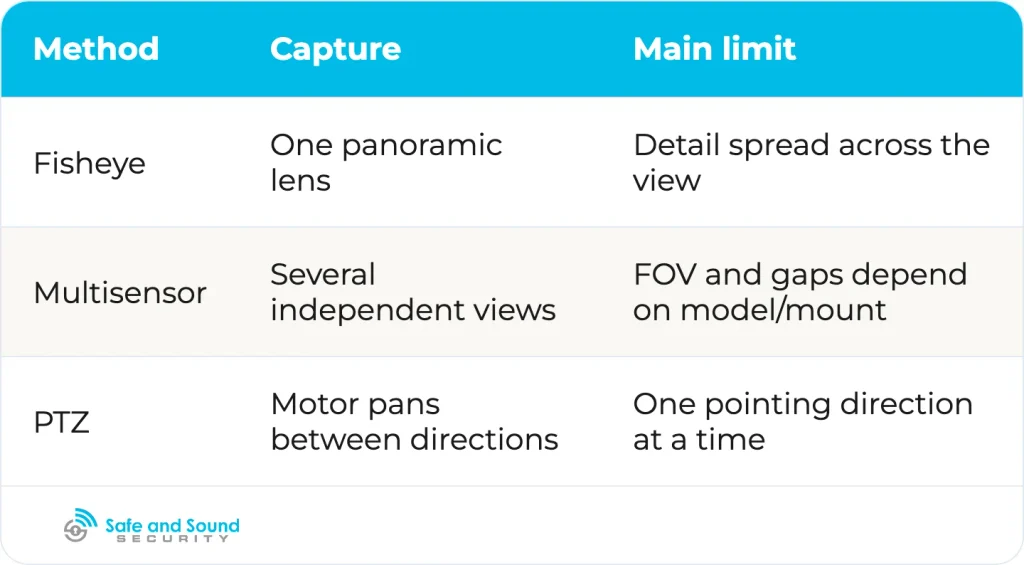
A wide-view camera reaches coverage in one of three ways: a fisheye lens records a panoramic view, a multisensor unit records several independently aimed views, or a motorized lens pans between directions. A multisensor housing does not guarantee a full circle: combined field of view depends on model, lens positions and mounting. A PTZ sees one pointing direction at a time.
Below are our nine picks for 2026, ranked from commercial-grade systems down to budget cameras, plus how to choose and where to mount them. We install cameras for businesses nationwide and are brand-agnostic, so these are ranked on merit, not on what we prefer to sell.
Key Takeaways
- Panoramic, multisensor and motorized coverage differ. A fisheye records its panoramic field at once. A multisensor records several directions simultaneously, but its combined field can have gaps. A PTZ changes its pointing direction over time.
- Check detail where identification matters. Multisensor cameras provide separate sensor views; a fisheye spreads one sensor across a wider scene. Neither total megapixels nor a panoramic label guarantees readable faces or plates. Verify target pixel density, distance, lighting and viewing angle.
- One 360 camera can replace several fixed cameras, but cabling is the real cost. The hardware savings are real. The bigger saving on a business install is fewer cable runs and less labor, which is where most of a camera budget actually goes.
- Match the tier to the job. Commercial multisensor cameras cost more and need a recorder or cloud license and proper power, but they hold up outdoors and feed analytics. Consumer cameras are cheaper and easier but trade away weatherproofing, detail, and reliability.
- Business-scale 360 is an installation decision, not just a camera decision. Mounting height, dewarping, power over Ethernet, and how the footage is stored and searched matter as much as the camera you pick.
Top 9 360-Degree Outdoor Security Cameras for 2026
Numbering here is for navigation, not a straight quality ranking. A commercial multisensor camera and a consumer solar camera do different jobs, so the list runs from commercial-grade at the top to budget picks at the bottom. All prices are approximate and current as of November 2026.
| # | Camera | Best for / focus | Coverage method + resolution | Connectivity | US hardware reference (Nov 14, 2026) | Third-party rating |
|---|---|---|---|---|---|---|
| 1 | Verkada CH52-E-F | Multi-site central management | Four independent views, up to 328°, 20MP (4x5MP) | PoE, Command, onboard storage | Quote-based; license additional | Not publicly rated |
| 2 | Axis P3737-PLE | Large outdoor zones | Four independent channels, up to 360° by mounting, 20MP | PoE, VMS/NVR | B&H $1,959 | Not publicly rated |
| 3 | SureVision SV-FE5-N | Panoramic overview | Fisheye, 5MP | PoE; compatible SureVision 16+ NVR required | $849.99 regular | Not publicly rated |
| 4 | Reolink RLC-823S2 | Optical zoom on PoE | PTZ, 8MP / 4K | PoE+ | $258.99 sale / $379.99 regular | Small sample only |
| 5 | Ubiquiti UniFi Protect AI 360 | Properties already on UniFi | Fisheye panoramic, 4MP | PoE | ~$399 | Not publicly rated |
| 6 | Tactacam Defend 360 | Remote sites without WiFi | PTZ; 4K photos / 1080p clips | LTE, solar/battery | $199.99 + data plan | Not cited |
| 7 | Reolink TrackMix | Auto-tracking | PTZ dual-lens, 4K | PoE or WiFi + adapter | WiFi $199.99 | Small sample only |
| 8 | eufyCam S4 | Small sites | Fixed 4K + 2K PTZ hybrid | WiFi; solar/battery or wired mode | $349.99 regular | Not cited |
| 9 | TP-Link Tapo C560WS | Budget single-area coverage | PTZ, 4K | WiFi + adapter | $74.99 sale / $99.99 regular | Not cited |
1. Verkada CH52-E-F
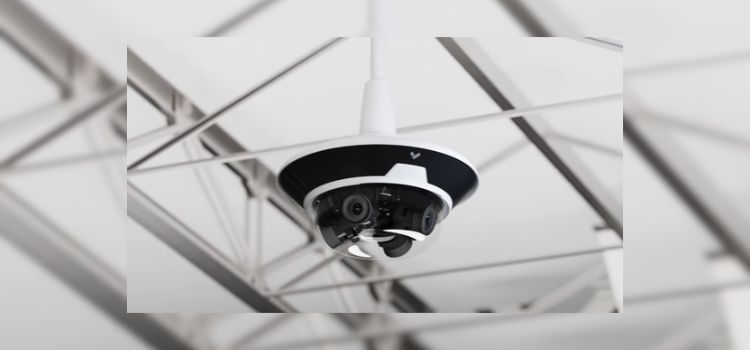
The Verkada CH52-E-F records four independent 5-megapixel views, totaling 20MP, with a combined field of view up to 328°. It stores footage on the camera itself, with no separate recorder; do not treat the housing as guaranteed gap-free 360° coverage. Verkada lists onboard storage from 1TB to 8TB, managed from a browser instead of a local NVR.
- Coverage method: Four independent 5MP sensors, 20MP combined; up to 328° combined field of view
- Night vision: Infrared to roughly 98 feet
- Weatherproofing: IP66, IK10 vandal rating
- Power and storage: PoE++ (802.3bt) for IR or extended-temperature operation; PoE+ (802.3at) without IR. Onboard storage, cloud-managed
- Price: Quote-based, sold with a Verkada license through certified partners
- Best for: Businesses and agencies with multiple sites that want to watch and manage every camera from one dashboard without running NVRs at each location
- Not for: Buyers who want a one-time purchase with no ongoing cost. It needs an active Verkada license and the PoE class required by the selected operating mode; deployment pricing is quote-based
- Third-party rating: Not publicly rated (commercial channel)
We are a Verkada Platinum Partner and install Verkada cameras regularly for multi-site commercial and government clients. Verkada cameras are also built for compliance-sensitive sites, which matters when a project has federal funding.
2. Axis P3737-PLE
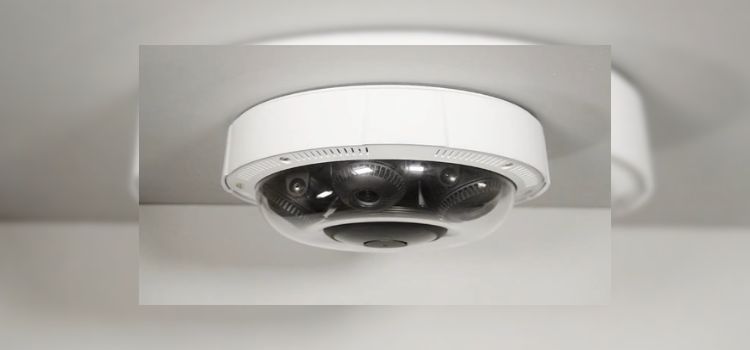
The Axis P3737-PLE provides four independently aimed 5MP channels, totaling 20MP. Head positions and mounting can provide coverage up to 360°; it is not one stitched continuous image. It replaces the older Axis P3719-PLE, which Axis discontinued, and adds on-camera deep-learning analytics.
- Coverage method: Four independent 5MP channels, up to 360° depending on head positions and mounting
- Night vision: Infrared for the independently aimed views
- Weatherproofing: IP66 and IP67 weather shield for outdoor mounting
- Power and storage: PoE, feeds a VMS or NVR
- Price: B&H listed model 02634-001 at $1,959 on November 14, 2026; hardware only
- Best for: Large outdoor zones where the four views can meet the coverage plan. Check the exact model’s NDAA/TAA documentation and the project’s procurement requirements
- Not for: A single home. It is a premium camera that needs a recorder and proper power behind it
- Third-party rating: Not publicly rated (commercial channel)
Axis designs its own image processors in-house, which supports its compliance positioning for government work. See our Axis security cameras page for the models we install.
3. SureVision SV-FE5-N Fisheye Dome
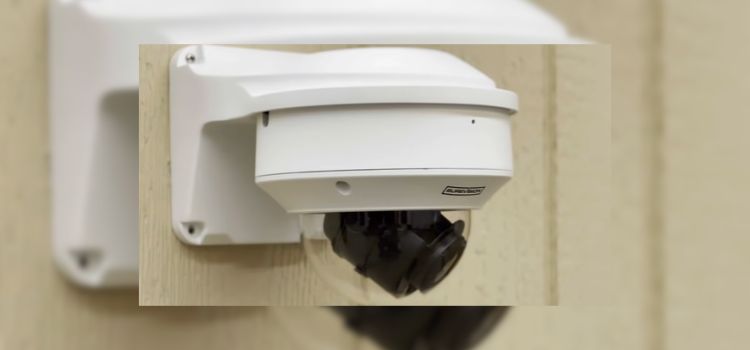
The SureVision SV-FE5-N is a 5MP fisheye dome rated IP66/IK10 for indoor or outdoor use. Its panoramic overview depends on mounting and obstructions. Supported centralized recording, dewarping, virtual PTZ and advanced display require a compatible SureVision 16-channel-or-larger NVR; the brand states that its 4- and 8-channel NVRs are not compatible.
- 360 method: Single fisheye lens, 5MP, 360-degree view
- Audio: Dual built-in microphones; two-way audio requires compatible external audio equipment
- Dewarping: Supported panoramic dewarp and virtual PTZ require a compatible SureVision 16-channel-or-larger NVR
- Power and storage: PoE; confirm the required compatible SureVision NVR and its recording configuration
- Price: $849.99 regular on the brand-owner page, checked November 14, 2026; the listed HOLIDAY20 promotion gives $679.99 subject to its terms
- Best for: Overhead coverage of lobbies, retail floors, intersections, and open rooms where the mounting and panoramic field meet the coverage requirements
- Not for: Capturing fine detail at the edges of a large outdoor lot. At 5MP spread across a 360-degree view, a single fisheye is sharpest in the middle and softens toward the edge, and the footage needs dewarping to look natural
- Third-party rating: Not publicly rated (commercial channel)
4. Reolink RLC-823S2
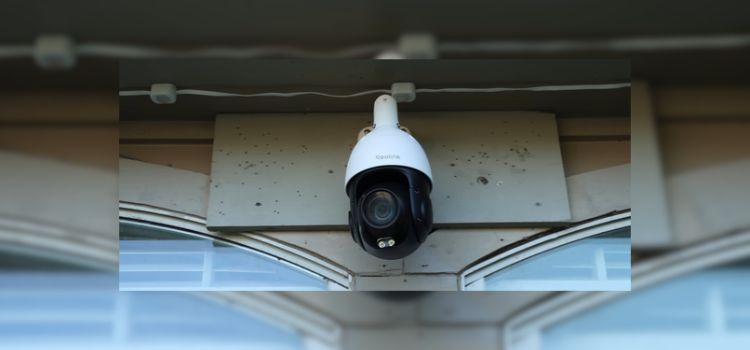
The Reolink RLC-823S2 is a 4K pan-tilt-zoom camera that covers 360 degrees of pan with 16x optical zoom, bridging the gap between consumer and commercial. It runs on Power over Ethernet for continuous recording and holds detail at distance well for its price.
- 360 method: PTZ, 360-degree pan plus 90-degree tilt, 8MP / 4K
- Zoom: 16x optical
- Night vision: Color and infrared, to roughly 260 feet
- Weatherproofing: IP66
- Power and storage: Active PoE+ (802.3at), microSD recording; confirm the current supported card specification
- Price: Official US one-camera listing: $258.99 sale / $379.99 regular, checked November 14, 2026
- Best for: Businesses on a budget that want optical zoom and reliable wired power without stepping up to a full commercial platform
- Not for: Watching every direction at once. A PTZ sees one direction at a time, so it can miss something happening behind it while it faces the other way. It also needs a PoE+ switch, not a basic one
- Third-party rating: Small review sample only at major retailers, not yet a reliable signal
5. Ubiquiti UniFi Protect AI 360
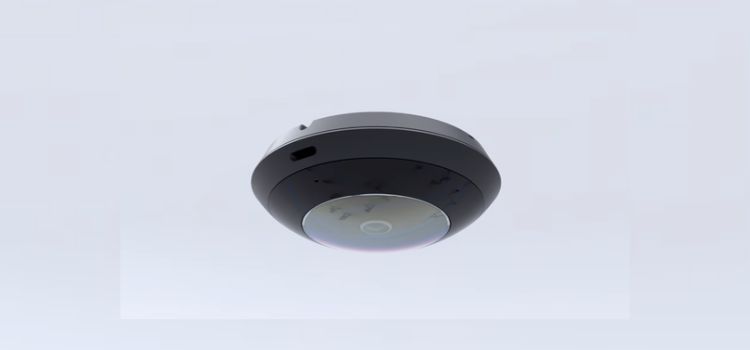
The Ubiquiti UniFi Protect AI 360 is a fisheye panoramic camera for indoor use or covered outdoor mounting, built for properties already running the UniFi Protect system. Its fixed fisheye lens captures 360-degree coverage, with 4MP (1920 x 1920) recorded output and digital pan, tilt, and zoom viewing rather than mechanical camera movement. It ties into the wider UniFi ecosystem for management and storage, which is its main appeal.
- 360 method: Fisheye panoramic capture with digital pan, tilt, and zoom viewing; 4MP (1920 x 1920) recorded output
- Mounting: Indoor or covered outdoor locations; IPX4 while covered
- Power and storage: PoE, UniFi Protect storage
- Price: Around $399
- Best for: Businesses or properties already standardized on Ubiquiti UniFi that want a 360 camera inside the same dashboard
- Not for: Buyers who want the highest resolution. At 2K it sits below the 4K picks on this list, and it depends on the UniFi Protect ecosystem to work fully
- Third-party rating: Not publicly rated with a reliable count
6. Tactacam Defend 360
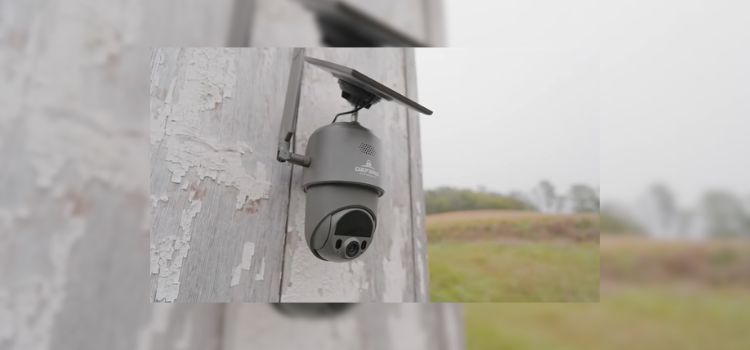
The Tactacam Defend 360 is a cellular outdoor camera with pan, tilt, and zoom that connects over LTE, built for sites with no WiFi or power. It runs on a rechargeable battery with an included solar panel, so it can watch a remote gate, lot, or field without any wiring.
- 360 method: PTZ (pan, tilt, zoom), virtual 360
- Resolution: Up to 4K photos; 1080p video clips up to 30 seconds
- Weatherproofing: IP65
- Power: Rechargeable battery plus an included solar panel
- Connectivity: LTE cellular, with a data plan required (sold separately)
- Price: Official DFD-PTZ01 listing: $199.99, checked November 14, 2026; data plan additional
- Best for: Remote outdoor sites with no WiFi, such as gates, back lots, barns, farms, and job sites
- Not for: High-resolution continuous recording. It captures 1080p video in short bursts rather than 24/7 4K video, and it needs a cellular data plan
- Third-party rating: Retailer ratings exist but are not reproduced here
7. Reolink TrackMix (PoE or WiFi)
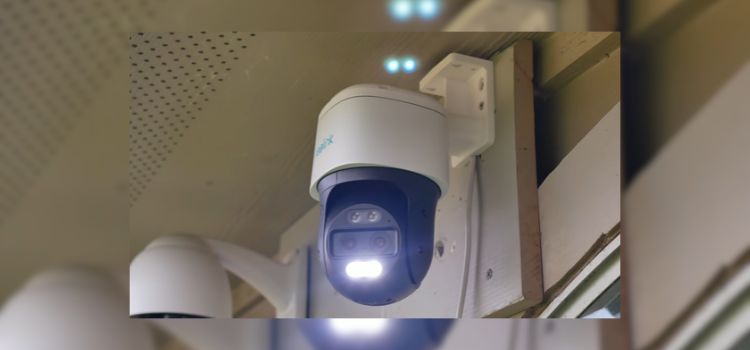
The Reolink TrackMix is a 4K dual-lens camera with pan-and-tilt and auto-tracking, available in both PoE and WiFi versions. The dual lens pairs a wide view with a zoomed view, so you get the whole scene and a close-up at the same time.
- 360 method: PTZ dual-lens, pan and tilt, 4K
- Tracking: Auto-tracking of moving subjects
- Night vision: Color night vision
- Power and storage: PoE version carries power/data over Ethernet; WiFi version needs a separate power adapter. Two-way audio
- Price: Official US WiFi one-camera listing: $199.99, checked November 14, 2026; confirm the selected version
- Best for: Flexible installs that need auto-tracking and the choice of running on either a network cable or WiFi
- Not for: Simultaneous all-direction coverage. As a pan-tilt camera it watches one direction at a time, not a true panoramic view. Its public review count is also still small
- Third-party rating: Small review sample only at major retailers, not yet a reliable signal
8. eufyCam S4
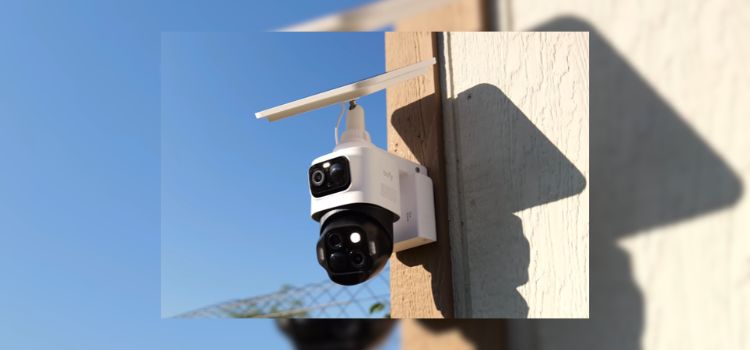
The eufyCam S4 is a wire-free consumer camera that combines a fixed 4K lens with a rotating 2K pan-tilt lens and runs on battery with a solar panel, with no monthly fee for local recording. For continuous recording, eufy supports a wired 24/7 mode using the included cable kit and a user-supplied 5V/2A-or-higher adapter; solar/battery operation is a different mode.
- 360 method: Hybrid, fixed 4K lens plus rotating pan-tilt lens
- Night vision: Color night vision
- Weatherproofing: IP65
- Power and storage: Solar/battery mode or wired continuous-recording mode; standalone local storage and no mandatory subscription. Existing HomeBase S380 setups need current firmware/app support
- Price: Official single-camera regular price $349.99, checked November 14, 2026
- Best for: Homes and small properties that want wide, wire-free coverage and no recurring fee
- Limits: Solar/battery mode depends on charge and sunlight; do not assume it provides continuous recording. Wired 24/7 recording requires the specified adapter and cable setup. Confirm storage, management and support requirements for a commercial deployment
- Third-party rating: Retailer ratings exist but are not reproduced here
9. TP-Link Tapo C560WS
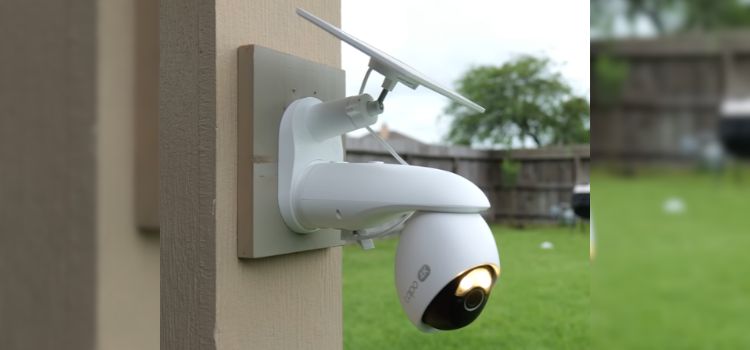
The TP-Link Tapo C560WS is a budget 4K pan-tilt camera that covers 360 degrees of pan, with on-device AI and no cloud fees for local recording. It is the easiest and cheapest way to add wide coverage to a single outdoor area.
- 360 method: Motorized pan and tilt with 360-degree pan coverage, 4K
- Zoom: 18x digital
- Night vision: Color (starlight sensor)
- Weatherproofing: IP66
- Power and storage: WiFi 6 data connection with a power adapter; local storage and on-device AI, with no mandatory cloud fee
- Price: Official US store: $74.99 sale / $99.99 regular, checked November 14, 2026
- Best for: Covering one outdoor area, such as a driveway or back door, on a tight budget without a subscription
- Not for: Wide professional coverage. It is a consumer camera on WiFi, watches one direction at a time, and its 18x zoom is digital rather than optical, so detail drops as you zoom in
- Third-party rating: Retailer ratings exist but are not reproduced here
How 360-Degree Coverage Works: Fisheye vs Multisensor vs PTZ
Fisheye, multisensor and PTZ describe different capture methods. Check the actual field of view and required target detail rather than treating a 360-degree label as a full-coverage guarantee.
Fisheye
A fisheye camera uses one ultra-wide lens to capture a full circular view from a single sensor. It can provide a panoramic overview from one mounting point in suitable rooms, lobbies and open spaces. The trade-off is detail: one sensor is spread across the entire scene, so the image is sharpest in the center and softens toward the edges. Fisheye footage also looks curved until it is corrected, a process called dewarping, which happens either in the camera or in the recording software.
Multisensor
A multisensor camera combines several lenses and sensors in one housing and records several views simultaneously. Combined field of view depends on the model, head positions and mounting: the CH52-E-F reaches up to 328°, while the P3737-PLE can cover up to 360° depending on installation. Sensor totals do not guarantee identification. Verify pixel density at the target, distance, lighting, lens angle and the required analytics before relying on faces or plates being readable.
PTZ (Pan-Tilt-Zoom)
A PTZ camera is a single camera on a motor that pans, tilts, and zooms to cover a 360-degree range. It can rotate to face any direction and zoom in on a detail, which fixed cameras cannot do. The limitation is that it sees only one direction at a time, so while it faces the parking lot it is blind to the loading dock. Manufacturers often market a camera that pans 355 or 360 degrees as “360-degree,” but motorized pan coverage is not simultaneous coverage of every direction. A fisheye captures its panoramic field at once; a multisensor captures its configured views simultaneously and can still have gaps. PTZ cameras work best alongside fixed cameras, not as the only camera on a site.
A note on dewarping
Dewarping is the software step that flattens a fisheye’s curved image into a usable rectangular view. It happens in one of two places: in the camera hardware, which creates fixed views you cannot change later, or in the recording software, which lets you re-angle the footage after the fact. Software dewarping can retain the original panoramic image for playback views when the selected recording platform supports it. Check the exact camera/recorder pairing: the SureVision model above requires a compatible SureVision 16-channel-or-larger NVR for its supported dewarp and virtual-PTZ functions; do not assume an arbitrary VMS provides them.
What to Look For in a 360-Degree Outdoor Camera
The specs that matter most on a 360 outdoor camera are resolution, weatherproofing, night vision, power, and smart detection. Weigh them against where the camera will go, not against a spec sheet in isolation. The two retained multisensor examples each total 20MP across four 5MP views; SureVision uses one 5MP fisheye sensor. These totals do not guarantee usable identification detail at a particular distance.
- Resolution and the detail trade-off. Check resolution per view and the pixel density at the target, not just total megapixels. Identification depends on distance, lighting, angle, lens settings and motion as well as resolution; verify the required result at the site.
- Weatherproof rating. For fully exposed outdoor mounting, look for IP66 or IP67. IP65 is fine under cover, and anything rated IPX4 is splash-resistant only and should stay under an eave. Commercial cameras often add an IK vandal rating as well.
- Night vision. Check both the type (infrared, color, or both) and the stated range in feet. A camera that reads “night vision” without a distance figure is making a vague promise.
- Power and connectivity. Power over Ethernet carries both power and data on one cable and is the most reliable option for a permanent business install. WiFi describes the data connection, not the power source: selected models need an adapter, while others use battery/solar. Cellular can serve remote sites without a local data network. Learn more in our guide to Power over Ethernet cameras.
- Smart detection. Look for detection that tells people, vehicles, and animals apart, which cuts down false alerts. On commercial cameras, that same analytics layer extends to facial recognition and license plate reading.
Where to Install 360-Degree Outdoor Cameras
360-degree cameras work best where one camera can watch a wide, open area without obstructions, such as a parking lot, yard, lobby, or retail floor. Placement decides how much coverage you actually get.
- Open areas and parking lots: Choose the position and height from the model’s field of view, target distances and required detail. Verify overlaps and gaps before replacing several fixed cameras with one housing.
- Building corners and walls: Check the manufacturer’s supported mounting arrangement, obstruction angles and overlap. A corner position does not by itself guarantee full perimeter coverage.
- Warehouses and high spaces: Shelving can block the view. Select height around obstructions and required target detail, following the model’s mounting instructions rather than a universal height.
- Entry points and junctions: Verify each corridor and the area below the camera. Add a separate identification view where the panoramic angle cannot provide the required detail.
- Smaller sites: Mount on the building eaves or a corner to cover the perimeter, and add one over the driveway or entrance for vehicles.
For parking areas specifically, see our guide to the best parking lot security cameras.
Wired vs Wireless (and PoE vs Solar vs Cellular)
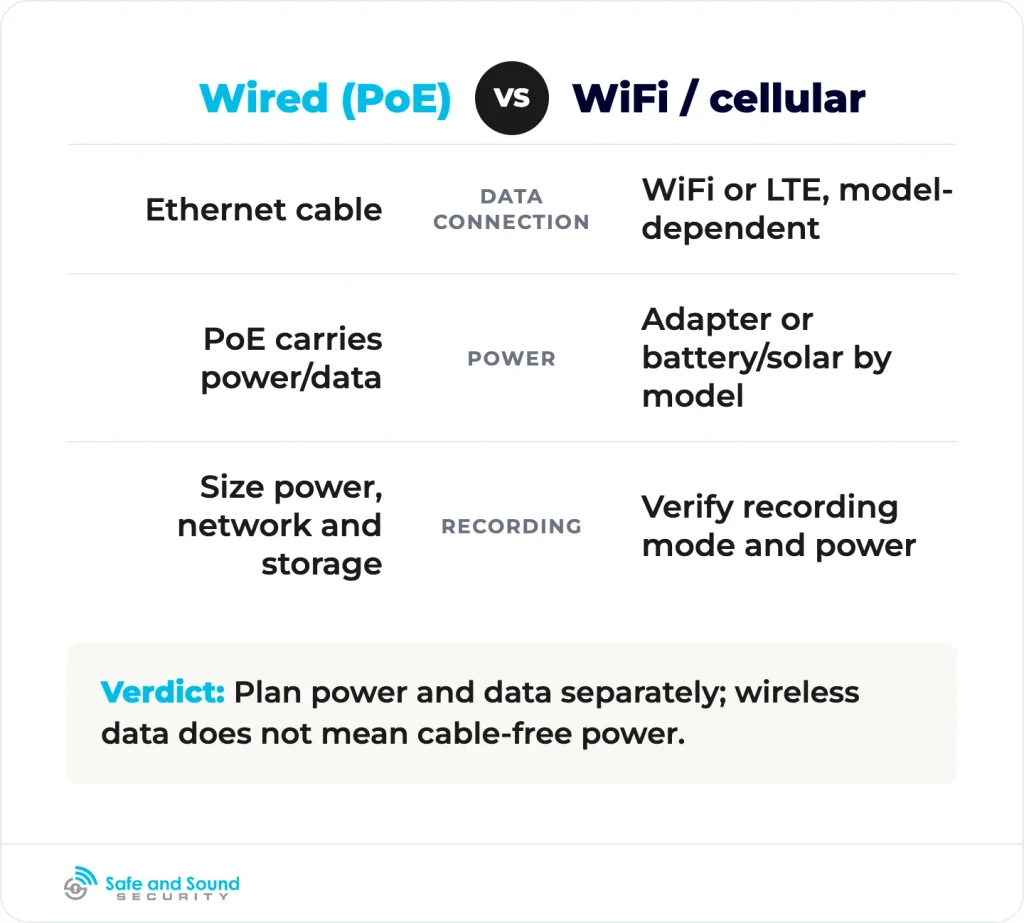
Plan data connectivity and power separately. PoE supplies both over Ethernet. A WiFi camera may need a power adapter, while selected models support battery/solar operation; a cellular camera uses an LTE data connection and its own specified power source.
Wired cameras, especially those on Power over Ethernet, deliver continuous power and a stable connection over a single cable, which is why they are standard for business sites that need uninterrupted recording. The trade-off is installation: running cable to each camera takes planning and labor.
Wireless cameras use WiFi or cellular for data, but they do not all eliminate power cabling. TrackMix WiFi and Tapo need an adapter; battery/solar models depend on charge and sunlight. The eufy S4 has a separate wired 24/7 mode requiring its specified cable and adapter. For truly remote sites with no WiFi, such as a gate, a lot, or a farm, a cellular camera connects over LTE instead of a local network.
Benefits and Trade-offs of 360-Degree Cameras
A panoramic or multisensor camera can cover a wider area from one location, potentially reducing device and cable counts. Actual coverage, gaps and identification detail must be checked for the selected model and mounting position.
Benefits:
- Full coverage with fewer cameras. One well-placed 360 camera can cover an area that would otherwise need several fixed cameras, which lowers hardware cost and, more importantly on a business install, cuts the number of cable runs and the labor behind them.
- Simultaneous views within the actual field. A fisheye records its panorama and a multisensor records its configured views without waiting for a motor to turn. Obstructions and coverage gaps still need to be checked.
- Weather resistance. Most outdoor 360 cameras carry high IP ratings and hold up to year-round conditions.
Trade-offs:
- Detail softens at the edges. A single fisheye is sharpest in the center and loses detail toward the edge of the frame. Multisensor cameras reduce this, at a higher price.
- A blind spot directly below. An overhead 360 camera can see more of the top of a person’s head than their face, so for identification at an entrance, pair it with a fixed camera at eye level.
- Moving parts on PTZ models. A PTZ relies on a motor that can wear over time, and it covers 360 degrees in turns rather than all at once.
- Setup and calibration. Dewarping and placement take more thought than a standard camera, which is where professional installation earns its keep on larger sites.
Professional Installation for Business-Scale 360 Coverage
For a business, school, or government site, a 360-degree camera is only as good as its installation. Getting full value from a multisensor or fisheye camera depends on mounting height, power, how the footage is dewarped, and how it is stored and searched, and those are the parts a spec sheet does not cover.
A few things change at business scale:
- Dewarping lives in the video management system. On a commercial install, we handle dewarping in the recording software rather than locking it into the camera, so an operator can re-angle fisheye footage during playback instead of being stuck with one fixed view.
- Power and cabling are designed, not guessed. Commercial 360 cameras run on PoE, and the higher-resolution multisensor units need the right PoE class and switch capacity. We handle the cameras and the structured cabling under one contractor, so the network behind them is built to carry the load.
- Analytics need a verified capture design. Check target pixel density, distance, lighting, angles and motion for the selected application. A combined megapixel count does not guarantee face identification or readable plates.
- Compliance matters on funded projects. Government and federally funded sites often require NDAA-compliant cameras. We install NDAA-compliant options such as Axis and Verkada so a project stays eligible.
We have installed security cameras for more than 800 businesses, and we are brand-agnostic, so we specify the camera that fits the site rather than the one we would rather sell. For large or multi-site coverage, our security camera installation and live video monitoring teams handle the design, cabling, and setup end to end.
Frequently Asked Questions
What is the difference between a fisheye and a multisensor 360 camera?
A fisheye uses one lens and sensor for a panoramic view. A multisensor uses several lenses and sensors for independently aimed views. Their field of view and useful detail depend on the exact model and mounting; neither class guarantees gap-free coverage or identification at every distance.
Do 360-degree cameras work for businesses and parking lots?
They can suit businesses and parking lots when the selected model and installation meet the coverage requirements. Check field of view, gaps, obstructions and target detail before replacing fixed cameras. Faces and plates require a verified capture design; mounting one multisensor centrally is not a guarantee of identification.
Can I view footage from a 360-degree security camera remotely?
Yes, most 360-degree cameras include an app or software that lets you view live and recorded footage from a phone, tablet, or computer over the internet. Commercial systems add centralized management, so a business can watch cameras across multiple sites from one dashboard.
Do 360-degree cameras need professional installation?
It depends on the camera and the site. Consumer cameras are designed for do-it-yourself setup, while commercial multisensor and fisheye cameras benefit from professional installation to handle mounting height, power, dewarping, and storage correctly. On a business site, placement and cabling decide how much coverage you actually get.
How long can a 360-degree outdoor camera record?
Recording length depends on the camera’s storage, the storage type (local card, onboard storage, NVR, or cloud), and the recording settings. Commercial systems can retain footage for months. For example, some cloud-managed cameras offer onboard storage with retention up to a year.
What is the best height for a 360-degree outdoor camera?
There is no single mounting height for all fisheye, multisensor and PTZ cameras. Choose height to meet the required coverage and identification detail, avoid obstructions and follow the selected model’s mounting instructions. Check the resulting views at the actual target distances.
Final Thoughts
The best 360-degree outdoor security camera comes down to the site and the job. For a business, school or government facility, compare the Verkada CH52-E-F and Axis P3737-PLE against the site’s actual coverage and target-detail requirements. Their independent views, mounting constraints, recording platform and power requirements matter more than a combined resolution number. For a smaller site or a tight budget, a wire-free camera like the eufyCam S4 or a budget pan-tilt camera like the TP-Link Tapo C560WS gives wide coverage at a low price.
At Safe and Sound Security, we design and install commercial 360-degree camera systems for businesses, schools, and government facilities nationwide, backed by 19 years of work and more than 20,000 protected locations. Because we handle the cameras and the cabling under one contractor and stay brand-agnostic, we specify the system that fits the site rather than a single product line.
If you are planning 360-degree coverage for a business or multi-site property, our team can help you choose the right cameras and install them. Get a free quote to get started.
Sources
- Verkada: CH52-E-F Multisensor Camera
- Axis Communications: AXIS P3737-PLE Panoramic Camera
- SureVision: SV-FE5-N 360 Fisheye Dome Camera
- Reolink: RLC-823S2 PoE Camera
- Ubiquiti: UniFi Protect AI 360 technical specifications
- Reolink: TrackMix WiFi Camera
- eufy: eufyCam S4 Security Camera
- TP-Link: Tapo C560WS Outdoor Camera
- Tactacam: Defend 360 Camera
- ScienceDirect: Panoramic Cameras
- ScienceDirect: Motion Detection
- B&H: Axis P3737-PLE 02634-001
- Tapo US Store: C560WS


