
Video surveillance software, also called a video management system (VMS), is the software that records, stores, manages and lets you review footage from your security cameras across one site or many. For a business or government buyer, the right VMS ties every camera into one console, adds search and AI analytics, and controls who can view footage and for how long.
This guide compares 11 commercial VMS platforms we install and integrate at Safe and Sound Security, a nationwide commercial security integrator. It is written for facilities, IT, security and procurement teams choosing a platform for a business, school, agency or multi-site operation, not for a home or a hobbyist running cameras on a spare PC. We are brand-agnostic: we deploy whichever platform fits the cameras, compliance rules and scale in front of us.
Key Takeaways
- A VMS is not the same as video surveillance itself. Video surveillance is the whole practice of recording and reviewing footage. A video management system is the software layer that runs it, orchestrating the cameras, storage, viewing and analytics.
- The real decision is architecture, not brand. Cloud, on-premise or hybrid, and whether the platform works with the cameras you already own, matter more than which logo is on the box.
- Compliance is a hard gate for government work. Federal procurement, contractor-use and grant-spending rules can restrict covered equipment, including specified Hikvision and Dahua equipment. Screen the models against the actual contract or award.
- Cloud means a subscription and a managed service. On-premise means a license and servers you run yourself. Neither is “better.” They suit different IT teams, budgets and retention rules.
- Who installs and supports the platform decides whether it works. The same software succeeds or fails on camera compatibility, network design and multi-site rollout, which is where an integrator earns its place.
Top 11 Video Surveillance Software Platforms for Business
The platforms below are grouped by architecture: cloud-native first, then enterprise and open on-premise platforms, then the major camera manufacturers’ own software. The numbers are for navigation, not a quality ranking. Every one is a credible commercial VMS, and the best choice depends on your cameras, compliance needs and scale.
| # | Platform | Deployment | Focus | NDAA compliant | Pricing basis |
|---|---|---|---|---|---|
| 1 | Verkada | Cloud | All-in-one cloud security (camera, access, alarm) | Yes (own hardware) | Camera license (subscription) + hardware |
| 2 | Rhombus | Cloud | Cloud-native cameras and sensors with AI | Yes (US chipsets) | Subscription + hardware |
| 3 | Eagle Eye Networks | Cloud | Camera-agnostic cloud video (VSaaS) | Depends on cameras | Per-camera subscription + bridge |
| 4 | OpenEye | Hybrid (cloud-managed) | On-site recording, cloud management | US software; depends on cameras | Recorder hardware + cloud subscription |
| 5 | Genetec Security Center | On-prem / hybrid | Unified VMS, access and ALPR | Depends on cameras | Perpetual/term license, quoted |
| 6 | Milestone XProtect | On-prem / hybrid | Open platform, broad camera support | Depends on cameras | License per channel (tiered) |
| 7 | Avigilon (Unity + Alta) | On-prem + cloud | Enterprise VMS plus cloud line | Yes (own hardware) | License (Unity) / subscription (Alta) |
| 8 | Bosch BVMS | On-prem | Large, mission-critical sites | Yes (own hardware) | License, quoted |
| 9 | ExacqVision | On-prem / hybrid | Recorder-based VMS, mixed cameras | Depends on cameras | Hardware + license, quoted |
| 10 | Axis Camera Station | On-prem / hybrid | Axis cameras and ONVIF devices | Yes (own hardware, TAA) | License per camera, quoted |
| 11 | Digital Watchdog (DW Spectrum) | On-prem / hybrid | Open VMS from a US camera maker | Yes (US-developed) | Recorder/license, quoted |
1. Verkada
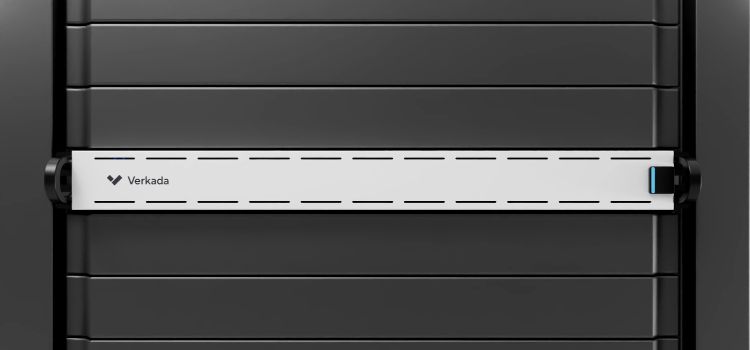
Verkada is a cloud-native platform that runs cameras, access control, alarms and sensors from one browser-based console called Command, with no separate on-site NVR or DVR in a native-camera deployment. Third-party camera reuse may add Command Connector. Founded in 2016 and based in San Mateo, California, it stores footage on the camera itself and in the cloud, so there is no separate recorder to manage.
Verkada is TAA and FY2019 NDAA compliant with FIPS 140-validated encryption, which clears it for many government deployments. Hardware carries a warranty of up to 10 years on some models. Verkada’s own cameras provide its fullest integration, while Command Connector can bring supported third-party cameras into Command through an additional appliance and licenses. Compare the compatibility list and limits on recording resilience, maintenance, analytics and alerts before planning reuse. The platform is sold on subscription. Cloud platforms also concentrate risk. In March 2021 a breach exposed live feeds from roughly 150,000 Verkada cameras after an exposed administrator account was compromised, as Axios reported at the time, and the FTC later took action over the company’s data-security practices. Verkada responded with mandatory two-factor authentication, a bug bounty and tighter admin controls. The lesson applies to every cloud VMS, not just this one: access hygiene is part of the product.
As a Verkada Platinum Partner, we have deployed Verkada systems for more than 210 customers.
2. Rhombus

Rhombus is a cloud-native VMS built around its own cameras and environmental sensors, all managed from a single web console. The platform is US-based and its cameras use US-designed Ambarella chipsets, which makes the line NDAA compliant out of the box.
Rhombus combines cloud management with analytics and environmental sensors. Its own cameras provide native integration, but it also supports selected third-party cameras through Rhombus Relay. Relay Lite uses a Rhombus camera on the same network as a bridge for one third-party stream and includes limited cloud archiving; Relay Core uses a separate appliance for a broader feature set. Check supported streams, retention, analytics and responsibility for camera firmware. Reuse can be possible, but it does not give every third-party camera the same capabilities as a native Rhombus camera.
We install and support Rhombus systems for commercial clients that want cloud video without on-site recorders.
3. Eagle Eye Networks

Eagle Eye Networks is a cloud video surveillance service (often called VSaaS) that records to the cloud through a small on-site bridge and works with a wide range of supported third-party cameras. Other cloud platforms may also offer third-party bridges, so compare model support and features rather than treating “cloud” as a universal replacement requirement. Founded in 2012 by Dean Drako, Eagle Eye merged with access-control company Brivo in 2025 to form a combined cloud physical-security business, as the companies announced.
The draw is camera flexibility. If you have an existing fleet of IP cameras, Eagle Eye can often bring them into the cloud without a full hardware swap, which closed camera-plus-software systems cannot do. It offers an open API and analytics on top. The main constraints are practical: cloud recording depends on having enough upload bandwidth at each site, and the service is billed per camera on an ongoing subscription.
We have deployed Eagle Eye Networks for more than 70 customers, often where a client wants cloud management but keeps cameras they already own.
4. OpenEye

OpenEye is a cloud-managed VMS, delivered through OpenEye Web Services, that records locally on a recorder or supported cameras with onboard storage while you manage the system through the cloud. The company is US-based in Liberty Lake, Washington, and is part of Alarm.com.
This hybrid design is its strength. Footage records on a local recorder, so a dropped internet connection does not stop recording, but health, users and live views are managed centrally from a browser. Professionals on forums such as r/videosurveillance repeatedly single out OpenEye’s proactive system health monitoring, which flags a failing camera or drive before anyone notices a gap in the footage. OpenEye works best with its own recorders and a list of approved cameras, and cloud management is a subscription on top of the hardware.
We deploy OpenEye for more than 80 customers that want local recording with cloud oversight across multiple locations.
5. Genetec Security Center

Genetec Security Center is a unified platform that combines video management (Omnicast), access control (Synergis) and license-plate recognition (AutoVu) in one open system. Genetec is a Canadian company based in Montreal, and Security Center is widely cited across the industry as a market-leading enterprise VMS.
Its strength is openness and scale. Genetec reports more than 42,500 customers worldwide, and the platform supports thousands of camera and device models rather than locking you to one brand. The trade-off is that Security Center is an enterprise system: it is typically deployed on-premise or hybrid, and it expects IT resources to run and maintain it, which is more than a small single-site business usually needs.
We are an authorized Genetec dealer and deploy Security Center for large and multi-site operations.
6. Milestone XProtect
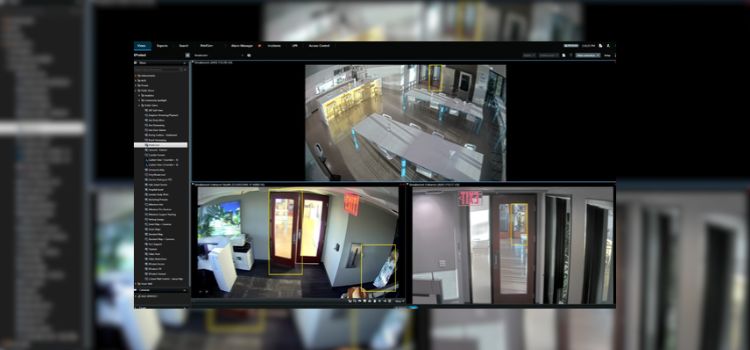
Milestone XProtect is an open-platform VMS designed to record and manage cameras from many different manufacturers rather than a single brand. Milestone is a Danish company owned by Canon, and XProtect is sold in tiered editions from a single small site up to large, distributed deployments.
Openness is the whole point of XProtect. It supports one of the widest camera-and-device compatibility lists in the industry and a large third-party integration marketplace, so it fits mixed fleets and specialized add-ons well. Because it is an on-premise and hybrid platform, you run the recording servers, which means more control but also more management overhead than a fully cloud service.
We install Milestone XProtect for clients that run cameras from several manufacturers on one system.
7. Avigilon (Unity and Alta)
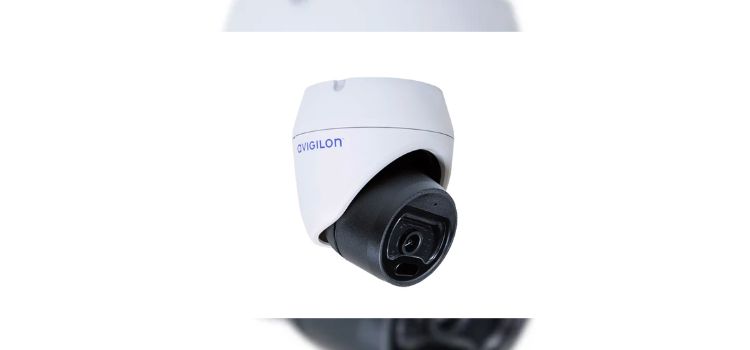
Avigilon, part of Motorola Solutions, sells two VMS lines: Unity, an on-premise enterprise platform formerly known as ACC, and Alta, a cloud-native line that grew out of OpenPath and Ava. Together they let a buyer choose on-premise or cloud under one brand.
Avigilon is known for AI-driven search, including Appearance Search, which finds a specific person or vehicle across hours of recorded video. Avigilon reports more than 100,000 organizations on its platforms, and its cameras are NDAA compliant with DoDIN APL listings for government use. The main thing to understand before buying is the split itself: Unity and Alta are different products with different strengths, so matching the right line to your site matters, and the Unity on-premise platform carries the usual enterprise setup and maintenance weight.
We are an Avigilon certified partner and deploy both the Unity and Alta lines.
8. Bosch BVMS

Bosch Video Management System (BVMS) is an on-premise enterprise VMS built for large, mission-critical sites such as transit systems, critical infrastructure and government facilities. Bosch Security Systems is a German manufacturer with a long track record in high-reliability security hardware.
BVMS is engineered for scale and uptime, and Bosch equipment has been tested and approved by US Department of Homeland Security and Department of Defense programs, which matters for compliance-driven buyers. It records Bosch cameras and integrates third-party devices. The flip side of an enterprise platform is that it is more than a small site needs: BVMS is on-premise and assumes a sizable, professionally managed deployment rather than a handful of cameras.
We install Bosch security systems for enterprise and critical-infrastructure sites.
9. ExacqVision

ExacqVision is a recorder-based VMS from Exacq, part of Johnson Controls, that runs on exacqVision network recorders or on your own server hardware. It records cameras from many manufacturers, including Johnson Controls’ Illustra line and third-party ONVIF devices.
Its appeal is a straightforward, hardware-plus-software bundle for on-premise deployments, with the option to run the software on your own servers. It integrates across the Johnson Controls ecosystem and a broad list of third-party cameras. ExacqVision is strongest as an on-premise platform and fits most naturally inside Johnson Controls and Illustra environments, so buyers standardized on other ecosystems should weigh that integration fit. We treat it as a reliable on-premise option where a client wants recorders they control.
We deploy ExacqVision for on-premise sites that want recorder-based video they manage locally.
10. Axis Camera Station

Axis Camera Station is the VMS made by Axis Communications for its own cameras and other ONVIF devices. Axis is a Swedish manufacturer that pioneered the network camera and designs its own ARTPEC chips, and Camera Station is its in-house software for small and mid-size deployments.
Paired with Axis cameras, Camera Station is tightly integrated and simple to run, and Axis hardware is TAA compliant for government procurement. Axis cameras are also open, so they can run under a different third-party VMS when a buyer wants one. The limitation is scope. Camera Station is designed around the Axis ecosystem, so an organization running a large mixed-manufacturer camera fleet may find an open, manufacturer-neutral platform a closer fit.
We are an authorized installer of Axis cameras and Camera Station for Axis-based sites.
11. Digital Watchdog (DW Spectrum)
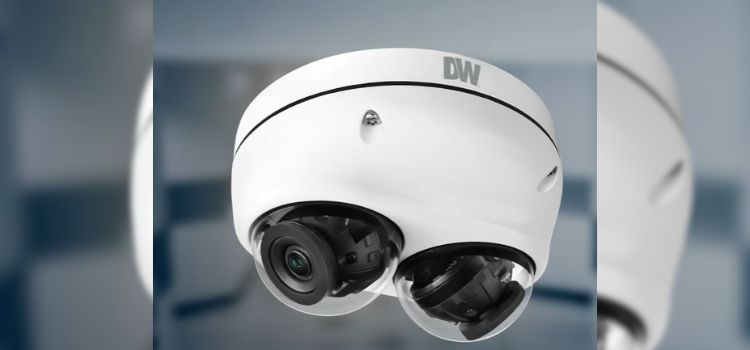
DW Spectrum IPVMS is an open video management system from Digital Watchdog that records the company’s own cameras alongside third-party ONVIF devices. Digital Watchdog is a US company, and its software is US-developed, which keeps the line NDAA compliant.
DW Spectrum is a lightweight, scalable VMS that runs on-premise or hybrid, with a clean interface and licensing that suits sites that want a straightforward recorder-and-software setup without an enterprise price tag. It integrates Digital Watchdog cameras and recorders as well as third-party cameras. As with other manufacturer platforms, its deepest features and support show up when it is paired with Digital Watchdog hardware, though it will manage mixed fleets.
We install Digital Watchdog systems for sites that want an open, NDAA-compliant VMS without enterprise complexity.
A Note on Hikvision, Dahua, and NDAA Compliance
Screen equipment before choosing the VMS. FAR 52.204-25 restricts federal procurement of systems using covered equipment as a substantial or essential component or critical technology. A separate contractor-use rule can affect a private company’s federal contracts even when the covered equipment is used elsewhere. 2 CFR 200.216 restricts spending federal award funds on covered equipment and services. Check the actual equipment, contract, award, exceptions and waivers; past federal funding alone is not a blanket removal rule.
Hikvision and Dahua require particular care in that screening. GSS can assess NDAA-compliant options for a buyer whose project or federal contracting obligations require them. A private company without an applicable federal restriction still needs to consider procurement, security and future contracting requirements. The ranked list emphasizes supported commercial platforms; see our NDAA-compliant security and Hikvision NDAA compliance guides for the equipment issue.
How to Choose Video Surveillance Software
The best VMS is the one that fits your cameras, your compliance rules, your IT resources and your sites. Work through the criteria below before you shortlist a platform.
Cloud, on-premise, or hybrid?
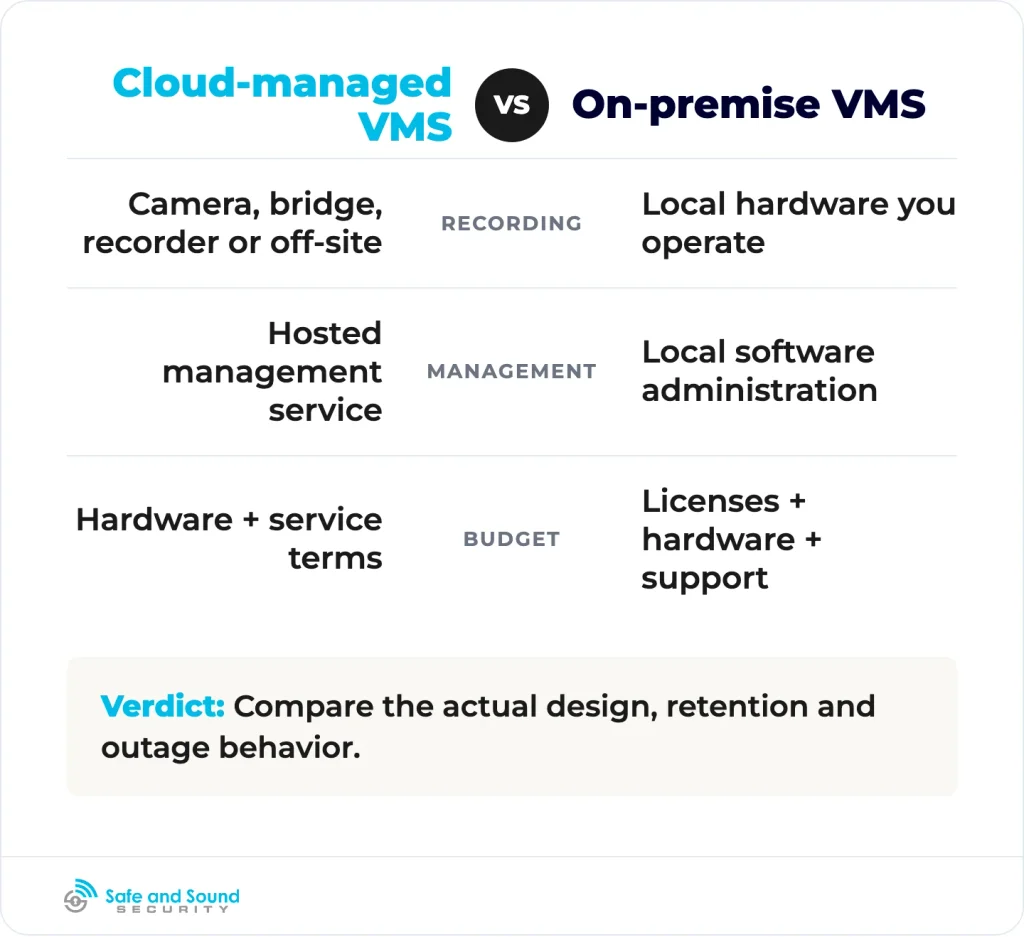
Separate cloud management from recording location. A cloud-managed platform may record off-site, on camera storage or on a local recorder/bridge, depending on the product. On-premise platforms record to hardware you operate. Compare where video is recorded, what works during an outage, which local devices you maintain and which subscriptions apply. Retention, upload capacity, outage behavior, camera reuse and the local support burden are better decision inputs than a universal camera-count threshold.
Will it work with your existing cameras?
If you already own IP cameras, check exact models and firmware before choosing a platform. Genetec, Milestone, Eagle Eye and ExacqVision support many third-party cameras through their supported-device lists and stream standards. Verkada Command Connector and Rhombus Relay can also reuse selected third-party cameras, with different appliance, licensing, retention and feature limits. Obtain a model-level compatibility check and pilot the required recording and analytics workflow before budgeting full replacement or full reuse.
AI video analytics: real versus marketing
Nearly every platform now advertises AI, so the useful question is which analytics actually run and where. Mature features include person and vehicle detection, license-plate recognition (LPR/ANPR), and appearance or similarity search that finds a specific subject across recorded footage. Ask whether the analytics run on the camera (edge), on a server, or in the cloud, and whether they carry an extra license. For a deeper look at what these tools can and cannot do, see our guide to AI video analytics companies.
Storage and bandwidth
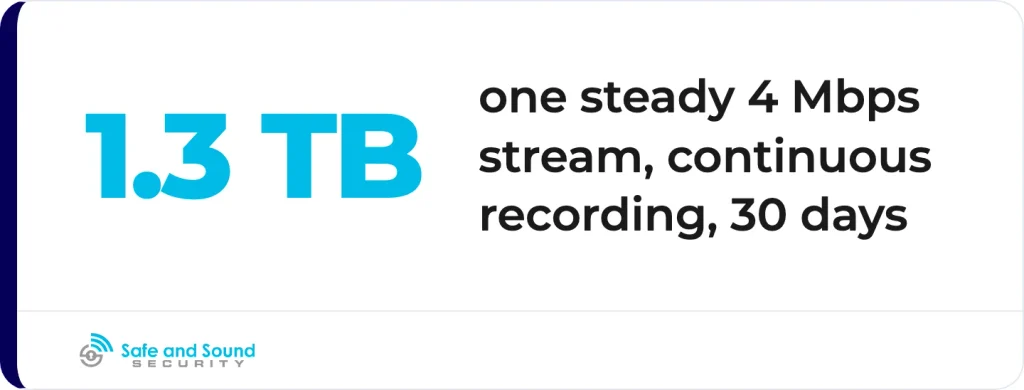
Video storage depends on the encoded bitrate, frame rate, codec, scene activity and retention period, not resolution alone. A transparent planning example is one continuously recorded stream held at 4 Mbps: 4,000,000 bits/second ÷ 8 × 86,400 seconds/day × 30 days is 1.296 TB, or about 1.3 TB, before storage overhead and redundancy. Ten such streams need about 13 TB for 30 days on those assumptions. This is a calculation from an assumed steady bitrate, not an uncompressed-video claim or a default requirement for every 1080p camera. Have the supplier document the actual settings and storage calculation for each proposal.
Integration with access control and alarms
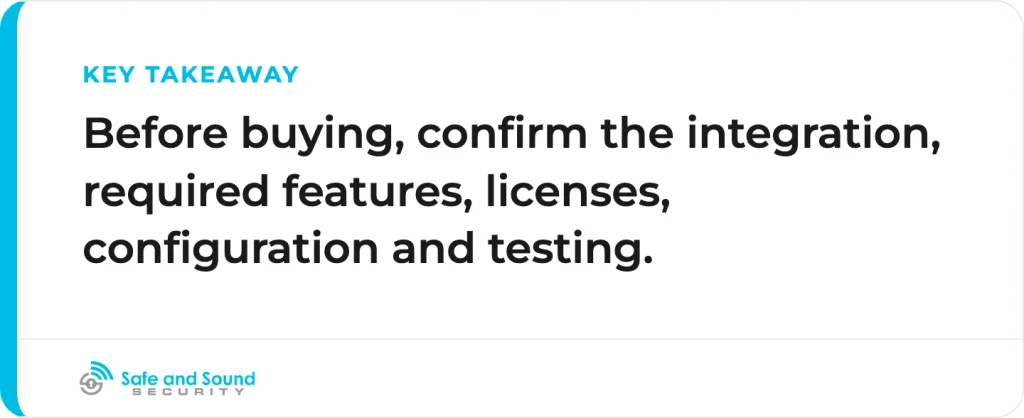
Confirm a supported integration between the selected VMS and access-control platform before buying. Document the features you need, such as a door event opening the correct video, searchable event links or an authorized lockdown workflow, then include the connector, licenses, configuration and testing in the quote. A unified platform may reduce integration work, but it does not eliminate the need to verify the specific devices and functions.
Compliance and NDAA
For government, education and federally funded work, compliance is a gate, not a feature. Confirm that both the cameras and the platform meet NDAA Section 889 requirements, and check for TAA, FIPS or DoDIN APL listings where your project demands them. See our overview of government security systems for how this plays out on public projects.
Support, installation, and multi-site rollout
The platform is only part of the job. Someone has to design the network, mount and configure cameras, set retention and user permissions, and keep the system healthy across every location. For a business with sites in several states, a single integrator handling the national rollout avoids coordinating a different local vendor at every address.
Total cost of ownership
Look past the sticker price to the full cost over several years. Cloud platforms spread cost into a predictable per-camera subscription that includes storage and updates. On-premise platforms front-load a license and hardware, then carry maintenance and eventual replacement. As of November 2026, most enterprise VMS platforms are quoted per deployment rather than listed publicly, so compare like-for-like on cameras, retention and support, not just the license line.
The Video Surveillance Software Market in 2026
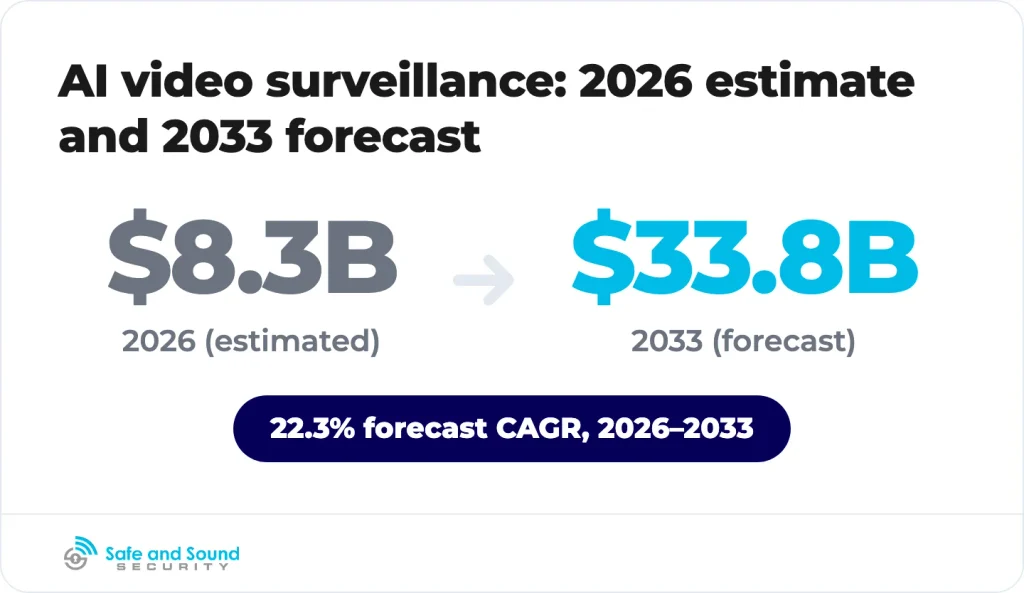
Mordor Intelligence’s US report estimates the US video surveillance market at $13.86 billion in 2025 and $15.53 billion in 2026, with a $27.45 billion forecast for 2031 and 12.07% CAGR over 2026–2031. Separately, Grand View Research’s current global AI-in-video-surveillance report estimates $8.3 billion for 2026 and forecasts $33.8 billion for 2033, at 22.3% CAGR over 2026–2033. These reports cover different markets and forecast periods. Market growth does not establish a particular system’s performance; compare the required analytics, tested features and operating costs for your deployment.
Why Work With a Security Integrator
Choosing the software is the easy part. Making it work across real buildings, real cameras and real compliance rules is where most projects succeed or stall. At Safe and Sound Security, we install and integrate every platform on this list, so our recommendation is not tied to one brand. We assess your cameras, sites, retention needs and compliance requirements, then deploy the VMS that fits, whether that is a cloud service with no servers or an open on-premise platform that reuses your existing fleet.
That integrator role is what the platform vendors do not provide. We design the network and cabling in-house under one C7 license, handle NDAA-compliant options for government and education buyers, and run multi-site rollouts from a single point of contact. As a Verkada Platinum Partner approved on more than 15 government procurement vehicles, with systems protecting more than 20,000 locations, we bring both the manufacturer relationships and the procurement fluency that a large or compliance-bound deployment needs.
If you are weighing platforms, our video management software and security camera installation pages explain how we scope and deploy a system. You can also contact us for a free consultation.
Frequently Asked Questions
What is the difference between a VMS and video surveillance?
Video surveillance is the overall practice of using cameras to observe and record an area for security. A video management system (VMS) is the software that runs it: it ingests the camera feeds, records and stores footage, manages users and permissions, and provides search and analytics. In short, surveillance is the goal and the VMS is the engine.
Is cloud or on-premise VMS better for business?
Neither is universally better; they suit different needs. Cloud management provides remote administration and recurring services, but the recording path may still need camera storage, a bridge or an on-site recorder. Check the actual design, update responsibility and bandwidth needs. On-premise VMS gives you local control of footage and a one-time license, in exchange for hardware you buy and maintain. Many businesses land on hybrid, recording locally while managing centrally from the cloud.
Does video surveillance software work with my existing IP cameras?
Many platforms can reuse supported IP cameras, but model and feature support vary. Genetec, Milestone, Eagle Eye and ExacqVision have broad third-party support. Verkada Command Connector and Rhombus Relay also provide paths for selected third-party cameras. Check the exact model, firmware, stream format, retention, analytics and license requirements, then pilot the required functions.
What is the best VMS for a small business?
There is no single best option. A small business with one site and no in-house IT usually fits a cloud or hybrid platform, because it can reduce server administration and provide browser-based management. Confirm any local recorder or bridge requirement. If you already own IP cameras, an open, camera-agnostic platform lets you keep them instead of replacing hardware. The right pick depends on your cameras, retention needs and budget, which is the kind of scoping we handle in a consultation.
Can I use Hikvision for a government project?
Covered Hikvision and Dahua equipment can be restricted by federal procurement, contractor-use and grant-spending rules. Check the model and actual contract or award. A private organization can still be affected through its federal contracting obligations even when a camera is not used on that work. Choose an appropriate compliant system where the requirements apply.
How much does video surveillance software cost?
Pricing depends on the model. Cloud platforms are typically billed per camera as a subscription that bundles storage and updates. On-premise platforms charge a license, often per channel or in tiered editions, plus the recorders or servers to run it. As of November 2026, most enterprise VMS platforms are quoted per deployment rather than published, so the real comparison is total cost over several years across cameras, retention and support.
Is video monitoring the same as video surveillance?
Not quite. Video monitoring generally refers to watching live camera feeds in real time, sometimes with active management like panning cameras or adjusting settings. Video surveillance is the broader practice of recording and storing footage for security purposes, often reviewed after an event to gather evidence or confirm what happened.
Is video surveillance the same as security cameras?
No. Security cameras are the hardware that captures the video. Video surveillance is the complete process that uses those cameras, along with recording, storage and software, to observe an area for security. The cameras are one component of a surveillance system, not the whole thing.
The Bottom Line
There is no single best video surveillance software, only the platform that fits your cameras, compliance rules, IT resources and sites. Cloud-managed systems like Verkada, Rhombus, Eagle Eye Networks and OpenEye vary in where they record and what local bridges or recorders they require; open enterprise platforms like Genetec, Milestone, Avigilon, Bosch and ExacqVision reuse mixed camera fleets and scale across large operations; and camera-maker software like Axis Camera Station and DW Spectrum is strongest paired with its own hardware. For any project touching federal funding, NDAA compliance narrows the field before anything else does.
At Safe and Sound Security, we install and integrate commercial video surveillance systems nationwide, and as a Verkada Platinum Partner approved on more than 15 government procurement vehicles, we deploy the right VMS for your requirements rather than selling one brand. If you want help matching a platform to your sites and compliance needs, explore our video management software services or contact us for a free consultation.
Sources
- Mordor Intelligence: US Video Surveillance Market
- Grand View Research: AI in Video Surveillance Market
- FCC Covered List
- FAR 52.204-25
- Verkada: Command Connector
- Axios: Hackers breach 150,000 Verkada security cameras
- FTC: Action against Verkada
- Brivo and Eagle Eye Networks Merge
- Genetec
- Avigilon
- Rhombus: Relay Lite third-party camera integration
- Milestone Systems


